Tuesday, April 22, 2014

OSCARS 2014- Early predictions for Best Picture nominees of 2014


With the 2013 Oscars over, it’s time to immediately start thinking about the 2014 Oscars! This is more the norm after Toronto and almost never before Cannes. Still today here we try to see which films currently under production might grab a spot on the most coveted nominations list, to be announced in January 2015.

PROBABALE BEST PICTURE NOMINEES OF 2015-

1. FOXCATCHER(Sony Pictures Classics, TBA)


Bennett Miller, whose previous two films "Capote" and "Moneyball" were both nominated for best picture is back with "Foxcatcher.
This was supposed to come out last year but got pushed back to 2014. Steve Carrell gained weight and caked on makeup to play psychotic millionaire/convicted murder John du Pont, & Channing Tatum called his role of Mark Shultz his “hardest acting challenge,” and the trailer is pretty moving.

Chances of Nomination- 8/10

2. GONE GIRL(20th Century Fox, October)


After Argo, every film with Ben Affleck is Oscar material(No, not Batman vs Superman). And Two-time best director nominee David Fincher ("The Social Network" and "The Curious Case of Benjamin Button") is directing this Gillian Flynn's extremely popular novel of the same name. No one does a dark crime thriller like Fincher, and the hype is just going to grow as more and more people make sure they read the book before the movie comes out.

Chances of Nomination- 9/10

3. INHERENT VICE(Warner Bros., December)


Paul Thomas Anderson's the director of "There will be Blood" and "The Master" is directing Inherent Vice. Jaquin Phoenix, with 2 back to back multiple nominees films(The Master and Her)is donning the 70s look as you can see in the picture. And releasing it in December means the producers are sure that this is Oscar worthy.

Chances of Nomination- 9/10

4. THE SEARCH


Anyone who says that they saw the awards success of "The Artist" coming a year in advance is a liar: even the filmmakers were probably a bit shocked it went as far as it did. So the follow-up from director Michel Hazanavicius, and star Bérénice Bejo, probably doesn't have the same element of surprise on its side.

Chances of Nomination- 6/10


5. BIG EYES


No Tim Burton movie has ever earned a Best Picture nomination, or indeed Best Director. But maybe 2014 is his year. Big Eyes narrates the true-life tale of Walter Keane, who became a celebrity for his paintings of large-eyed children, only for it to emerge that his wife Margaret was the real artist behind them. With a lot of Oscar-friendly names involved including five-time nominee Amy Adams as Margaret and two-time winner Christoph Waltz as Walter and The Weinstein Company backing it, I don't see it not getting a nomination.

Chances of Nomination- 6/10


6. A MOST VIOLENT YEAR


This latest from JC Chandor, who was snubbed this past year for "All Is Lost" in the 2013 ceremony is a 1981-set crime tale involving an immigrant (Oscar Isaac) and his wife (Jessica Chastain) trying to create opportunities for their family during the most crime-ridden year in New York. While I am sure Jessica CHastain will get her Best actress nomination for this, if this manages to get best picture nod is something to wait and watch.

Chances of Nomination- 6/10


7. INTERSTELLAR(Paramount, November)


Do I really need to tell you why it's here. Probably the most awaited film of 2014 this also has an awards-friendly cast: recent winners Matthew McConaughey and Anne Hathaway are the leads, with Jessica Chastain, Michael Caine, Matt Damon, Casey Affleck and Ellen Burstyn among those supporting. It might be that its sci-fi origins prove a problem, but "Gravity" certainly helped to break down some of those barriers. But among Nolan's films only "Inception" has managed a Best Picture slot, and the filmmaker himself
has never picked up a Best Director nod. Still this looks promising.

Chances of Nomination- 7/10


8. THE IMITATION GAME (Weinstein Company, Late 2014)


Based on a Black List-winning script, it tells the story of Alan Turing, who helped to crack the Enigma code and invent the modern computer before being hounded by the British government for his homosexuality—it's the stuff that Oscar glory is often made of. Benedict Cumberbatch has the lead role, with Keira Knightley, Matthew Goode and Mark Strong among those in support. The Weinstein Company hopes to revenge their shameful year at oscars 2013 with this. Hope this doesn't turn out to be a Fifth Estate.

Chances of Nomination- 6/10

9. WILD


Dallas Buyers Club was no where in the scene for best picture race and it got 6 nominations and 2 major wins, so its wise to keep track of director Jean-Marc Vallée's next. Reese WItherspoon hoping to reinvent her career like Matthew McConaghay plays a woman who, after the death of her mother and break-up of her marriage, decides to trek her way along 1,000 miles of the Pacific Crest Trail. It promises the kind of mix of stunning landscapes and a powerful central performance that can be very awards-friendly

Chances of Nomination- 5/10

10.UNBROKEN
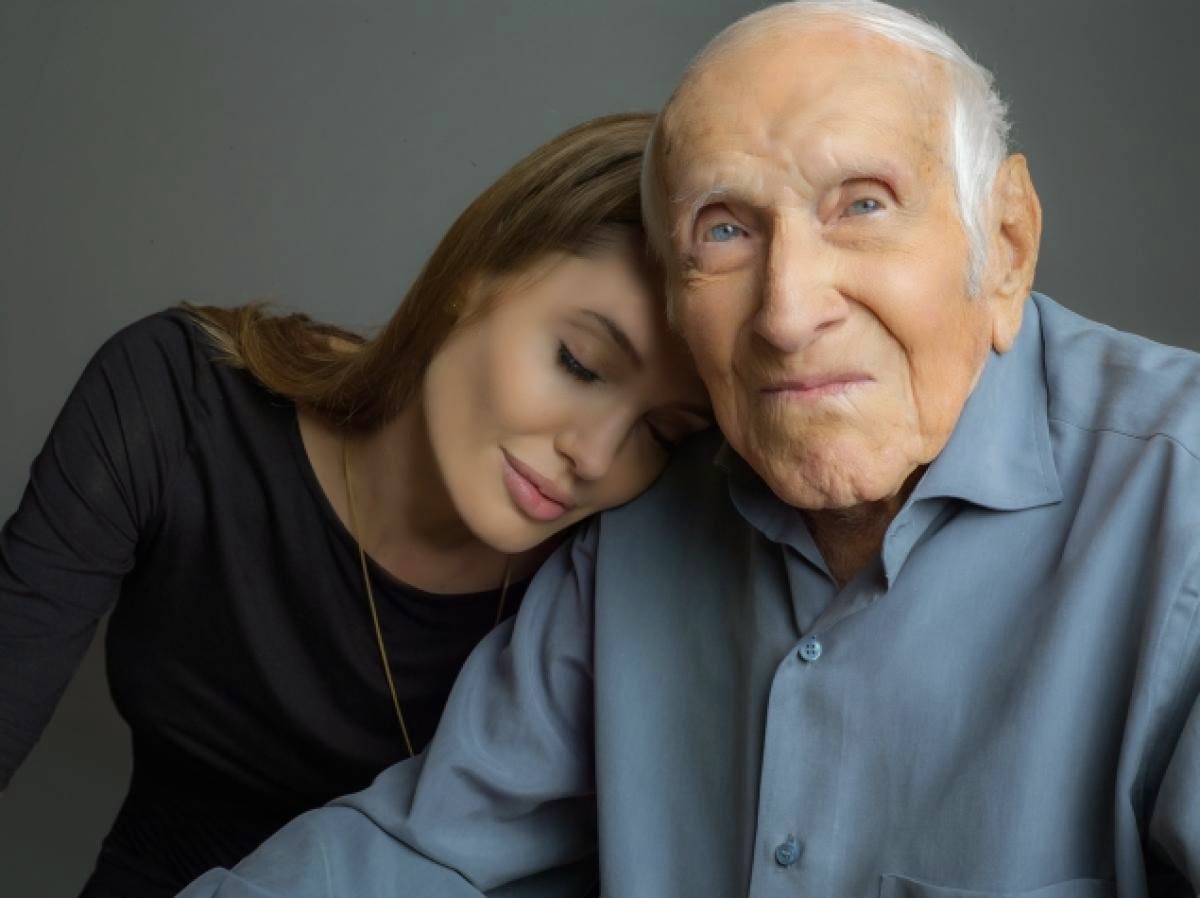

Angleina Jolie as the director means the film will be in the news for the full year. But just a year after Brad Pitt wins best producer, I can't see Angelina being nominated. And this is trying too hard as we saw at the Oscars this year. Still patriotic real stories are always Oscar worthy.

Chances of Nomination- 6/10


11. TRASH


Stephen Daldry has only made 4 films. "Billy Elliot" "The Hours" "The Reader" and "Extremely Loud and Incredibly Close". And these 4 films have seen 6 nominations(3 times best Director, 3 times Best Film). So it is obvious why his latest film is here. Story of three children in Rio De Janeiro who discover a mysterious object in the rubbish mounds of the city with a sprinkling of star power in the shape of co-stars Rooney Mara and Martin Sheen this is all set if it turns good.

Chances of Nomination- 6/10

OTHERS

This category includes those films which might not make the cut due to various reasons. Still chances are some of these might exceeds expectations and get into the awards buzz despite their shortcomings. So better keep track of these.

1. INTO THE WOODS


Although releasing on Christmas as Wolf of Wall Street this year, it might not make the cut being perceived as too mainstream. With a cast that boasts of Meryl Streep, Johnny Depp and Emily Blunt, it's still capable of landing itself good acting nominations. Sure to get Nomination no. 19 for Meryl.

Chances of Nomination- 2/10


2. THE GRAND BUDAPEST HOTEL

None of the previous films of Wes Anderson have managed a nod. Not even Moonrise Kingdom. That is why I don't see this getting either. And a film releasing just after the awards season has ended must not have high hopes for next year. But with impeccable reviews and a spot of 127 on IMDB top 250 this film will be the underdog for next year.

Chances of Nomination- 3/10

3. SUFFRAGETTE

A film about the early feminist movement in the UK that is written and directed by women starring an almost all-female cast including the likes of Carey Mulligan, Helena Bonham Carter and Meryl Streep. But this might not be able to release by 2014.

Chances of Nomination- Might not release in 2014

4. Suite Franchise


Michelle williams always does critically acclaimed films(with the exception of Oz). This film set during the early years of German occupation of France, romance blooms between Lucile Angellier, a French villager and Bruno von Falk, a German soldier. A best actress nod is sure.

Chances of Nomination- 3/10

5. Exodus


Christian Bale plays Moses. Will it make the cut? Mostly No. Unless it is the next Gladiator. But one thing is certain. It will earn huge money.

Chance of Nomination- 2/10

6. Mr Turner

Mike Leigh who almost always seems to get a screenplay nomination(7 time Oscar nominee) could finally win with this film, a biographical account of the British artist of the same name. But best picture looks hard.

Chance of Nomination- 2/10

7. Get On Up

The director of The Help "Tate Taylor" is reteaming with his former cast members Viola Davis and Octavia Spencer for James Brown-adaptation "Get On Up" that stars "42" breakout Chadwick Boseman as Brown. The film will give a fearless look inside the music, moves and moods of James Brown, taking audiences on the journey from his impoverished childhood to his evolution into one of the most influential figures of the 20th century.

Chance of Nomination- 4/10

8. Jersey Boys
Clint Eastwood is directing again. And trailer looks good. Mostly will find audience but not awards.


Obviously this is not an exhaustive list. There will be smaller films, indies like Beasts of the Southern Wild which might get the buzz for the awards. Also there will be some foreign films like The Amour which might surprise even their own country with a Best Picture Nomination. We might end up with a winner like 2009's The Hurt Locker or 2011's Artist, both of which no one could predict a year ago even as nominees. But then maybe 2014 might be one of those years like 2012's Argo or last year's 12 Years a slave which was Oscar material, the day they were announced. We will have to wait and watch. See you at the Oscars 2015.

Friday, April 18, 2014

INDIAN LOK SABHA ELECTIONS SINCE 1947


Since the Tryst with Destiny speech by Jawaharlal Nehru on 15th August 1947, Congress was the major political force driving Indian politics. Until 1967 Congress never won less than 73% of the total seats the Parliament. There were 4 factors that determined such a remarkable accomplishment.
1. Tremendous amount of good will and political capital from its leadership of the nationalist struggle. Congress leaders were very popular for the years spent in jail and the hardships suffered by them for independence.
2. Congress was the only party with an organization extending across the nation and down to the village level. The party's federal structure was based on a system of internal democracy that functioned to resolve disputes among its members and maintain party cohesion
3. Congress had its reach till the most remote villages, often by local heads of the villages who controlled the way the village was going to vote
4. It had plenty of funds thanks to support from influential people and also due to total control of government and policies uninterrupted from 1947-1967

1st Lok Sabha (1952):

Some congress leaders started forming their own parties well before the 1st lok sabha elections. While Shyama Prasad Mookerjee went on to found the Jana Sangh in October 1951, Dalit leader B. R. Ambedkar revived the Scheduled Castes Federation (which was later named the Republican Party). Despite all this, The Indian National Congress (INC) won 364 of the 489 seats and 45% of the total votes polled, over four times as many as the second-largest party. Jawaharlal Nehru became the first democratically elected Prime Minister of the country. Voter turnout was 45.7%. Scheduled Caste leader and the creator of the constitution B. R. Ambedkar was defeated in the Bombay constituency.


2nd Lok Sabha(1957)

The Indian National Congress managed to replicate its 1952 success story in the second Lok Sabha elections held in 1957. The INC managed to win 296 seats from a total of 490 candidates who were in the political fray. The party also secured 47.78 per cent majority winning a total of 57,579,589 votes. Pandit Jawaharlal Nehru came back to power with a comfortable majority. No part had fielded a woman candidate in the 1957 elections

3rd Lok Sabha(1962)

In the past 10 years Jawaharlal Nehru had with his charismatic brilliance led India to new heights. Parliament under Nehru passed reforms to increase legal rights of women in Hindu society and legislated against caste and untouchability, IITs were founded during his regime. Nehru advocated a socialist model for the economy of India — no taxation for Indian farmers, minimum wage and benefits for blue-collar workers. He nationalised heavy industries such as steel, aviation, shipping, electricity and mining and brought about an Industrial revolution. Many dams, canals were also built. The best examples of Nehru’s policies are his Non Aligned movement and The 5 year plans followed till this day. In 1961, after continual petitions for a peaceful handover, India invaded and annexed the Portuguese colony of Goa on the west coast of India.


With all this Congress again repeated a landslide victory winning 361 of the 494 seats with 44% vote share.
But Nehru’s China policy of “hindi chini bhai bhai” backfired and China declared war claiming parts of Kashmir in October 1962. With superior armed forces, China won and till date has control of Aksai Chin region of Kashmir. Widely criticised for his government's insufficient attention to defense, Nehru was forced to sack the then defense minister Krishna Menon and accept U.S. military aid. Soon Nehru’s health was on a decline and he died on May 27, 1964 of a heart attack. Veteran Congress leader Gulzarilal Nanda succeeded Nehru at his death for a period of two weeks. Congress chose Lal Bahadur Shastri as the new Prime Minister. In 1965 in the Second Kashmir War India and Pakistan again went to war over Kashmir, but no border agreement could be reached. To end the war The Tashkent Agreement was signed under the mediation of the Soviet government, but Shastri died mysteriously on the night after the signing ceremony on Jan 10, 1966. Again Guzarilal Nanda became Prime Minister for a period of two weeks.
The last 2 years had seen the death of 2 Prime Ministers of India. After Lal Bahadur Shastri’s death in 1966, Congress had no leader. It was divided into 2 factions, the Socialists which supported Indira Gandhi, Jawaharlal Nehru's daughter who had been serving as Minister for Information and Broadcasting and Moderates which supported Morarji Desai. Rammanohar Lohia called Indora a “Gungi gudiya” (Mute Doll). Due to support from Nehru’s faithful leaders Indira became the new Prime minister and led Congress to the 4th Lok Sabha elections in 1967.

4th Lok sabha (1967) - Rise Of Indira Gandhi


The halcyon days of what Indian political scientist Rajni Kothari has called "the Congress system" ended with the general elections in 1967. The reasons for Congress’s failure included the failure of the monsoons in 1965 and 1966 leading to hardships throughout northern and eastern India, and the unpopular currency devaluation in 1966. The rapid growth of the electorate, which increased by 45 percent from 1952 to 1967, brought an influx of new voters less appreciative of the Congress's role in the independence movement. There were also newer regional parties which had regional support.
Congress' internal crisis stared at its face in the results of the 1967 elections. For the first time, it lost nearly 60 seats in the Lower House, managing to win 283 seats. Until 1967, the grand old party had also never won less than 60 per cent of all seats in Assembly elections. It also suffered a major setback as Non-congress State governments were established in Bihar, Kerala, Orissa, Madras, the Punjab and West Bengal.
Among all this, Indira Gandhi, elected to the Lok Sabha from Rai Bareili constituency, was sworn in as the Prime Minister. In order to keep dissident voices at bay, she appointed Morarji Desai, who had opposed her candidature as PM after Nehru's death, as Deputy Prime Minister of India and Finance Minister of India.
Indira Gandhi was dismayed by congress’s performance in these elections and decided to take the party in the populist direction. She ordered the nationalization of India's fourteen largest banks in 1969. And then she supported former labor leader and Acting President Varahagiri Venkata Giri's candidacy for president despite the fact that the party organization had already nominated the more conservative Neelam Sanjiva Reddy. The veteran Congress leaders saw this as an insult to them and expelled Indira Gandhi from Congress and began looking for a new Prime Minister.
But 226 of the 283 Congress MPs still supported Indira. With these Indira Gandhi formed a new party called Congress (R)--for Requisition and the older Congress was called Congress (O)- for Organisation. The Congress (R) continued in power with the support of non-Congress groups, principally the Communist Party of India (CPI) and the Dravida Munnetra Kazhagam (DMK--Dravidian Progressive Federation). But Indira not wanting to lead a minority government called for elections one full year before in 1971 instead of 1972.

5th Lok sabha elctions(1972)

With the Congress (O) controlling most of the party organization, Indira Gandhi adopted a new strategy to mobilize popular support. Mrs Gandhi travelled throughout the country, energetically campaigning on the slogan "garibi hatao " (eliminate poverty), thereby bypassing the traditional Congress networks of political support.
She won 352 seats, a remarkable improvement from the 283 of the last elections.
Indira Gandhi was soon staring at a newer and bigger problem. Illegal immigrants from North east Pakistan (Present day Bangladesh) had started streaming into India fleeing from the tyranny under Pakistan’s rule. She didn't flinch when it came to taking tough decisions during the India-Pakistan war in 1971 that resulted in the liberation of Bangladesh. India's victory in December 1971 was hailed by all Indians as it came in the face of diplomatic opposition from both China and the United States. This was a huge boost for Indira.


But not everything was as good.
Having won the 1971 elections riding on the slogan of ”Garibi Hatao” Indira failed to remove poverty. The country experienced a severe drought in 1971 and 1972, leading to food shortages, and the price of food rose 20 percent in the spring of 1973. Oil prices quadrupled in 1973-74 and Unemployment and high Inflation was rampant.
The biggest blow to Indira came when the Allahabad high court in June 1975 found the prime minister guilty on the charge of misuse of government machinery for her election campaign. The court declared her election null and void and unseated her from her seat in the Lok Sabha. The court also banned her from contesting any election for an additional six years.

Jayaprakash (J.P) Narayan, a socialist leader in the preindependence Indian National Congress came out of retirement to lead what eventually became widely known as the "J.P. movement." Led by JP, Narayanan protestors flooded the streets of Delhi close to the Parliament building and the Prime Minister's residence. The Supreme court also found her guilty and ordered all privileges Gandhi received as an MP be stopped, and that she be debarred from voting. The next day, JP organised a large rally in Delhi, where he said that that a police officer must reject the orders of government if the order is immoral and unethical as this was Mahatma Gandhi's motto during the freedom struggle. Such a statement was taken as a sign of inciting rebellion in the country.
Within three hours, the electricity to all major newspapers was cut and the political-opposition arrested. Emergency had been declared throughout the country. The day after emergency was imposed, the Bombay edition of The Times of India carried an obituary that read "D.E.M O'Cracy beloved husband of T.Ruth, father of L.I.Bertie, brother of Faith, Hope and Justica expired on 26 June" A few days later censorship was imposed on newspapers. The Delhi edition of the Indian Express on 28 June, carried a blank editorial.

6th Lok Sabha Elections -1977

Indira Gandhi's rule during the Emergency alienated her popular support. After postponing elections for a year following the expiration of the five-year term of the Lok Sabha, she called for new elections in March 1977. The major opposition party leaders, many of whom had developed a rapport while they were imprisoned together under the Emergency regime, united under the banner of the Janata Party. By framing the key issue of the election as "democracy versus dictatorship," the Janata Party--the largest opposition party--appealed to the public's democratic values to rout the Congress (R). The vote share of the Congress (R) dropped to 34.5 percent, and the number of its seats in Parliament plunged from 352 to 154. Indira Gandhi lost her seat from Rai Brailey.

MORARJI DESAI

The Janata Party's 298 seats and its allies' 47 seats (of a total 542) gave it a massive majority. Morarji Desai became the first non-Congress Prime Minister of India.
The Janata split and split over the years but it had recorded an important landmark in the country political history: it was a coalition and proved that the Congress could be defeated.

CHARAN SINGH

7th Lok sabha elections – 1980

The Janata Party came into power riding the public anger against the Congress and the Emergency but its position was weak. The party held 270 seats in the Lok Sabha and it never quite had a firm grip on power. The inability of Janata Party factions to agree proved the party's undoing. Morarji Desai lost a trust vote in Parliament and resigned. Charan Singh, who had retained some partners of the Janata alliance, was sworn in as Prime Minister in June 1979. Not getting majority he called for elections in 1980. The fight between Janata Party leaders and the political instability in the country worked in favour of the Congress (I), which reminded voters of the strong government of Indira Gandhi. Indira Gandhi returned to win the January 1980 elections after forming a new party, the Congress (I--for Indira), in 1978.
The Congress (I)'s share of the vote increased by 8.2 percent to 42.7 percent of the total vote, and its number of seats in the Lok Sabha grew to 353, a majority of about two-thirds. This success approximated the levels of support of the Congress dominance from 1947 to 1967. Yet, as political scientist Myron Weiner observed, "The Congress party that won in 1980 was not the Congress party that had governed India in the 1950s and 1960s, or even the early 1970s. The party was organizationally weak and the electoral victory was primarily Mrs. Gandhi's rather than the party's."

8th Lok sabha Elections -1984


.....To be Continued

Saturday, March 1, 2014

AND THE OSCAR GOES TO.....PREDICTING THE 86TH ACADEMY AWARDS 2014


After months of film festivals, movie screenings, campaigning and galas, the Academy Awards are finally here and movie fans worldwide are getting set for their annual Oscar pools. The 86th Annual Academy Award is all set to take place on Sunday 2 March, at the Dolby Theatre in Hollywood. The awards ceremony will begin at 5:30 according to Indian time( Monday morning).


Ellen DeGeneres will host the 86th Academy Awards on Sunday. This is for the second time Ellen is hosting the ceremony, after an extremely appreciated performance in 2007. Frontrunners "Gravity" (ten nominations) and "12 Years a Slave" (nine nominations) are fighting it out for the best film, while "American Hustle" (ten nominations) is still in the game, with actors nominated in all four acting categories for the second year in a row, and three BAFTA wins. Jennifer Lawrence might win that second Oscar after all.

Here are my predictions on who will win in each category, who I think deserved(but won't win) and who I would hate to see win.


BEST PICTURE
The nominees are-

“12 Years a Slave”
“Gravity”
“American Hustle”
“Captain Phillips”
“Nebraska”
“Philomena”
“Dallas Buyers Club”
“The Wolf of Wall Street”
“Her”


Some years, the winner of the best picture Oscar is a closed race. There was no serious competition against “The Artist” in 2011.
Some years, it’s a clear face-off. Think of the tough, little-seen Iraq War film “The Hurt Locker” in 2009 up against the most successful film ever, the special-effects driven “Avatar.” David toppled Goliath in the end.
And some years, it’s all-out chaos. Welcome to 2014. Between a 3 way competition between Gravity, 12 years a slave and American Hustle, 12 years a Slave is leading the race.

Who will win- 12 years a slave

Who should win- 12 years a Slave

Who isn't even nominated- Inside Lweyn davis, Saving Mr. Banks, August Osage

Who should not win - American Hustle


BEST ACTOR

The nominees are-
Matthew McConaughey in “Dallas Buyers Club”
Chiwetel Ejiofor in “12 Years a Slave”
Bruce Dern in “Nebraska”
Leonardo DiCaprio in “The Wolf of Wall Street”
Christian Bale in “American Hustle”

This race just continues to mystify — and while Matthew McConaughey is out front, the love for "12 Years a Slave" and its central performance could push Chiwetel Ejiofor ahead. And how about that Leonardo DiCaprio? With Martin Scorsese as his wingman, the star of "The Wolf of Wall Street" is pushing hard for a win.


Who will win- Matthew McConaughey in “Dallas Buyers Club”

Who should win- Leonardo Di Caprio in Wolf of Wall Street”

Who isn't even nominated- Tom Hanks for "Captain Philips", Robert Redford for "All is lost" and Jaquin Phoenix for "Her"

Who should not win - Christian Bale in "American Hustle"


BEST ACTRESS

The nominees are -
Cate Blanchett in “Blue Jasmine”
Amy Adams in “American Hustle”
Judi Dench in “Philomena”
Sandra Bullock in “Gravity”
Meryl Streep in “August: Osage County”

Not only has Blanchett won everywhere else, but her performance so obviously towers above the rest. Her performance in Blue Jasmine will serve as a benchmark for generations of younger actresses to learn and admire. Hope Woody Allen's private life has no impact on a brilliant performance.


Who will win- Cate Blanchett in “Blue Jasmine”

Who should win- Cate Blanchett in “Blue Jasmine”

Who isn't even nominated- Emma Thompson for Saving Mr banks(I still cannot believe she isn't nominated)

Who should not win - Meryl Streep (Not again man!!!)


BEST DIRECTOR

The nominees are-
“Gravity” Alfonso Cuarón
“12 Years a Slave” Steve McQueen
“American Hustle” David O. Russell
“The Wolf of Wall Street” Martin Scorsese
“Nebraska” Alexander Payne

Gravity was a film no one else could have executed. You can only ask "How'd he do it?!" so many times in regards to Cuarón's visually stunning work on "Gravity" before it's time to just give the man his Oscar.

Who will win- Alfonso Cuarón for Gravity

Who should win- Alfonso Cuarón

Who isn't even nominated- Spike Jonze for Her


BEST SUPPORTING ACTOR


The nominees are-
Jared Leto in “Dallas Buyers Club”
Michael Fassbender in “12 Years a Slave”
Barkhad Abdi in “Captain Phillips”
Jonah Hill in “The Wolf of Wall Street”
Bradley Cooper in “American Hustle”


Jared Leto has been in the lead forever, with a Screen Actors Guild honor to back him up. But is it possible he was ahead for too long? Could that open a door for unknown Barkhad Abdi to bring one home for the "Captain Phillips" team? Or Michael Fasssbander for the evil role in 12 years a slave.


Who will win- Jared Leto for Dallas Buyers Cluby

Who should win- Michael Fassbender in “12 Years a Slave”

Who should not win- Jonah Hill in “The Wolf of Wall Street”

Who isn't even nominated- Jeremy Renner(the only actor from American Hustle not nominated)


BEST SUPPORTING ACTRESS

The nominees are-
Lupita Nyong’o in “12 Years a Slave”
Jennifer Lawrence in “American Hustle”
June Squibb in “Nebraska”
Sally Hawkins in “Blue Jasmine”
Julia Roberts in “August: Osage County”

Finally, there's some suspense! This would be Lawrence's Oscar had she not just won last year — that's just how Oscar politics go. Last year's win for Jennifer Lawrence as Best Actress actually tips this in Lupita Nyong'o's favor in her gutsy debut. But if "American Hustle" doesn't win here — where will it win?


Who will win- Lupita Nyong’o in “12 Years a Slave”

Who should win- Lupita Nyong’o in “12 Years a Slave”

Who should not win- Jennifer Lawrence in “American Hustle”

Who isn't even nominated- Léa Seydoux in Blue Is the Warmest Color


BEST ORIGINAL SCREENPLAY

The nominees are-
Her”
“American Hustle”
“Nebraska”
“Dallas Buyers Club”
“Blue Jasmine”


Who will win- Her

Who should win- Her

Who should not win- American Hustle


BEST ADAPTED SCREENPLAY

The nominees are-
“12 Years a Slave”
“Captain Phillips”
“Philomena”
“The Wolf of Wall Street”
“Before Midnight”

Who will win- 12 years a slave

Who should win- Before Midnight

Who should not win- The Wolf of wall street


BEST CINEMATOGRAPHY

The nominees are-
“Gravity” Emmanuel Lubezki
“Nebraska” Phedon Papamichael
“Inside Llewyn Davis” Bruno Delbonnel
“Prisoners” Roger A. Deakins
“The Grandmaster” Philippe Le Sourd


Hard to see this not going to "Gravity" for that breathtaking photography. It feels like we've all been to outer space after watching that film.

Who will win- Gravity

Who should win- Gravity


BEST ANIMATED FILM

The nominees are-
Frozen”
“The Croods”
“The Wind Rises”
“Despicable Me 2”
“Ernest & Celestine”

Everyone agrees that all other contenders will be "Frozen" out.

Who will win- Frozen

Who should win- Frozen

Who should not win- Despicable me 2


BEST ORIGINAL SONG

The nominees are-
“Let It Go” from “Frozen”
“Happy” from “Despicable Me 2”
“Ordinary Love” from “Mandela: Long Walk to Freedom”
“The Moon Song” from “Her”


Who will win- Let it go

Who should win- Let it go (It will be a treat to watch Idina Menzel perform live at the oscars)

Who should not win- Ordinary Love (Although Nelson Mandela's family is coming to watch the performnace)


BEST ORIGINAL SCORE

The nominees are-
“The Book Thief” John Williams
“Gravity” Steven Price
“Her” William Butler and Owen Pallett
“Philomena” Alexandre Desplat
“Saving Mr. Banks” Thomas Newman


Who will win- Gravity

Who i want to win- Saving mr. Banks


BEST COSTUME DESIGN

The nominees are-
“American Hustle”
“The Great Gatsby”
“The Invisible Woman”
“12 Years a Slave”
“The Grandmaster”


The Great Gatsby," once thought to be a major Oscar contender (before anyone had seen the movie), will now get its consolation prizes for those parts of Baz Luhrmann's mortifying jazz age pastiche that worked, including his wife Catherine Martin's costumes.

Who will win- The Great Gatsby

Who should win- 12 years a slave


BEST PRODUCTION DESIGN

The nominees are-
“Her”
“The Great Gatsby”
“Gravity”
“American Hustle”
“12 Years a Slave”


Who will win- Confused between Gatsby, and 12 years a slave

Who should win- The Great Gatsby


BEST EDITING

the nominees are-
“Gravity”
“Captain Phillips”
“American Hustle”
“12 Years a Slave”
“Dallas Buyers Club”


Who will win- Gravity

Who should win- Gravity(Shortest film at 91 minutes)


BEST MAKEUP AND HAIRSTYLE

Nominees are-
Dallas Buyers Club
The Lone Ranger
Bad Grandpa


Who will win- Dallas Buyers Club

Who should win- Dallas Buyers Club


BEST FOREIGN LANGUAGE FILM

Nominees are-
“The Great Beauty” Italy
“The Hunt” Denmark
“The Broken Circle Breakdown” Belgium
“Omar” Palestine
“The Missing Picture” Cambodia


Who will win- The great Beauty

Who isn't even here- Blue is the warmest color


BEST VISUAL EFFECTS

Nominees are-
“Gravity”
“The Hobbit: The Desolation of Smaug”
“Iron Man 3”
“The Lone Ranger”
“Star Trek Into Darkness”

The category with the most money at the box office. This award has been predicted as early as the eye-popping "Gravity" first screened for anyone.

Who will win - Gravity

Who should win- Gravity

Who isn't even nominated- Pacific rim


OTHER AWARDS

BEST SOUND EDITING- Gravity
BEST SOUND MIXING- Gravity
BEST ANIMATED SHORT FILM- Get a Horse


Catch the Oscars on Star Movies if you are in India live from 5:30 and come back to see how many of my predictions were correct. See you at the Oscars!!!

Friday, July 8, 2011

Horcruxes


A Horcrux is a dark magical object used to attain immortality. The concept is first introduced in Harry Potter and the Half-Blood Prince, though Horcruxes are present in earlier novels without being identified as such. The creation of a Horcrux requires one to commit a murder, which, as the supreme act of evil, "rips the soul apart". After the murder, a spell is cast to infuse part of the ripped soul into an object, which becomes the Horcrux. Rowling has never published the actual enchantment. In the final book of the series, Hermione finds the spell in a book titled Secrets of the Darkest Art.

Both inanimate objects and living organisms have been used as Horcruxes, though the latter are considered riskier to use, since an organism can move and think for itself. There is no limit to the number of Horcruxes a wizard can create. However, as the creator's soul is divided into progressively smaller portions, he loses more of his natural humanity and his soul becomes increasingly unstable. Under very specific conditions, a soul fragment can be sealed within an object without the intention or knowledge of the creator.
Horcruxes are extremely difficult to destroy. They cannot be destroyed by conventional means such as smashing, breaking, or burning. To be destroyed, a Horcrux must suffer damage so severe that repair through magical means would be impossible. Very few magical objects or spells are powerful enough to achieve this. Once a Horcrux is irreparably damaged, the fragment of soul within it is destroyed. A Horcrux can be magically undone only if the creator goes through a process of deep remorse for the murder committed to create the Horcrux. The pain of this remorse is so excruciating that the process itself may kill the creator.
Voldemort's creation of Horcruxes is central to the later storyline of the Harry Potter novels. As the number seven is a powerful, mystical number, Voldemort intended to split his soul into that many pieces, with six in Horcruxes and the last reposing within his body.
All of Voldemort's created Horcruxes were made using objects that had been important to him or that held some sentimental value.

Marvolo Gaunt's Ring
Tom Riddle created his first Horcrux using a ring owned by his maternal grandfather, Marvolo Gaunt, during the summer before his sixth year as a student at Hogwarts School of Witchcraft and Wizardry, when he was sixteen years old. He casts the spell after murdering his father. The ring is introduced during the fourth chapter of Half-Blood Prince, having already been destroyed by Albus Dumbledore, but its significance not yet revealed.
In a Pensieve memory, it is revealed that Riddle had taken the gold ring, which has a black stone inscribed with a magical symbol, from his uncle Morfin Gaunt, whom he had framed for the murder of his father and grandparents by altering his uncle's memories. Riddle wears the ring while still a student at Hogwarts, but eventually hides it in the house where the Gaunt family had lived. It remains hidden under the floorboards, placed in a golden box, and protected by several enchantments, until Dumbledore finds it during the summer break between the events of Order of the Phoenix and Half-Blood Prince. Dumbledore destroys the Horcrux with Godric Gryffindor's sword, though he is mortally injured by the ring's curses after putting the ring on his finger. The injury leaves his right hand permanently disfigured and would have killed him quickly if not for the intervention of Severus Snape, who slowed the curse to Dumbledore's right hand and arm, making them look withered, but the curse still progressed up Dumbledore's right arm and would eventually kill him if it had run its course. The damaged ring is kept for a time on a table in the Headmaster's office.
Before his death, Dumbledore hides the ring's black stone inside a Golden Snitch and he bequeaths the Snitch to Harry in his will. Dumbledore had learned that the stone is, in fact, the Resurrection Stone, one of the three Deathly Hallows. This was why he had put it on his finger: he had hoped to activate it and apologize to his long-dead family, quite forgetting it was also a Horcrux now, and thus likely to be protected by destructive enchantments. Voldemort remained unaware of the stone's additional magical properties throughout his lifetime.

Tom Riddle's Diary
Tom Riddle used his diary to create his second Horcrux during his sixth year at Hogwarts. He cast the spell after murdering his fellow classmate Moaning Myrtle using the Basilisk. The diary is introduced in the second chapter of the Chamber of Secrets and is destroyed by Harry Potter during the climax of the same book.
Before Voldemort's downfall, he entrusted the Horcrux to Lucius Malfoy. While aware of its corrupting magical properties, Malfoy did not know the diary was a Horcrux. In an attempt to discredit Arthur Weasley, Malfoy hid the diary in Ginny Weasley's cauldron, amidst her other books. Tom Riddle's soul-fragment possessed Ginny and, through her, reopened the Chamber of Secrets, finally starting to draw her life from her. At the end of book two, Harry saved Ginny and destroyed the diary by stabbing it with the venomous fang of a Basilisk, making it the first Horcrux to be destroyed. His reports of the diary's behaviour to Dumbledore were the latter's first inkling that Voldemort might have created not just one Horcrux, but several: "What intrigued and alarmed me most was that the diary had been intended as a weapon as much as a safeguard",implying that Voldemort must have had backups of some sort.


Helga Hufflepuff's Cup
Tom Riddle used a cup owned by Hogwarts founder Helga Hufflepuff to create his third Horcrux. The spell was cast after he murdered Hepzibah Smith by poisoning her. The cup is introduced during the twentieth chapter of Half-Blood Prince and is destroyed by Hermione Granger in the thirty-first chapter of Deathly Hallows.
Hepzibah Smith, who owned the cup, was a distant descendant of Helga Hufflepuff. Riddle killed Smith, stole the cup, then framed her house elf Hokey for the crime. Voldemort entrusted the cup to Bellatrix Lestrange, who kept it protected in her vault at Gringotts Bank, a place to which Harry guessed that a once penniless Voldemort would have always coveted a connection.

Salazar Slytherin's Locket
Riddle created his fourth Horcrux using a locket once owned by Salazar Slytherin, which had once belonged to Riddle's mother, Merope Gaunt. The spell was cast after Riddle murdered a Muggle tramp. The locket is introduced briefly in Order of the Phoenix (described only as "a heavy locket that not one of them could open") and is destroyed by Ron Weasley in the nineteenth chapter of Deathly Hallows.
Slytherin's locket was passed down through the generations and eventually ended up in the possession of Merope Gaunt. After being abandoned by her husband Tom Riddle Senior, Merope sold the locket to Caractacus Burke, shopkeeper of Borgin & Burkes, for ten galleons, a fraction of the locket's true value. The locket was eventually sold to Hepzibah Smith. Riddle stole the locket, along with Helga Hufflepuff's cup, after murdering Smith. Once the locket became a Horcrux, Voldemort hid it in a cave where he had once terrorized two of his fellow orphans. The cave's magical protection included a door that could only be opened with a blood offering, an enchanted boat, a basin of potion that causes pain and horrific visions to the drinker, and the use of Inferi. Dumbledore and Potter pursued the locket in The Half-Blood Prince, only to find a fake necklace.
Disillusioned Death Eater Regulus Arcturus Black had learned about the Horcrux and its hiding place beforehand. In an effort to bring about Voldemort's eventual downfall, he and his house elf Kreacher broke through the magical protection and stole the locket. While Black died in the effort, killed by the surrounding Inferi, Kreacher took the locket back to their home at Number Twelve, Grimmauld Place. Kreacher continued to protect the locket for years. However, while the Order of the Phoenix was using the house as its headquarters, the locket was stolen by Mundungus Fletcher, a petty criminal and member of the Order. He gave it to Dolores Umbridge as a bribe when she caught him selling stolen property.
Two weeks later, Harry, Ron, and Hermione infiltrated the Ministry of Magic where Umbridge worked, and stole the locket. Ron later saved Harry from being strangled by it when he wore it around his neck. When Ron attempted to destroy the locket, the fragment of soul inside assumed the shape of Harry and Hermione and played on Ron's fear that his two friends had started a romantic relationship during his absence. Ron destroyed the locket using the sword of Godric Gryffindor in the Forest of Dean.
After the release of the final book, several reviews noted similarities between Slytherin's locket and the One Ring from The Lord of the Rings, as both artifacts negatively affect the personality of those who wore them, are extremely difficult to destroy, and ensure their creator immortality.


Rowena Ravenclaw's Diadem
Lord Voldemort created his fifth Horcrux using Rowena Ravenclaw's diadem. A diadem is a kind of crown. Etched upon its surface was Ravenclaw's famous quotation: "Wit beyond measure is man's greatest treasure." It was said to enhance the wisdom of its wearer, which is Ravenclaw House's most treasured attribute.

Nagini
Nagini is the snake that Voldemort has with him all the time. It is the only live Horcrux apart from Harry Potter. Voldemort uses the snake's milk for sustenance in Goblet of Fire before he is resurrected by Peter Pettigrew. This Horcrux was created by Voldemort when he was hiding in the forests of Albania; the victim of murder who led to its creation was Bertha Jorkins.

Monday, April 11, 2011


ARE WE PROGRESSING BACKWARDS?

11th April 2011, 2:31 pm

“A small step for man, a giant leap for mankind”

It is generally assumed that giant leaps in technology lead to the improvement of society. With technology we can do things earlier generations couldn’t imagine. We can travel vast distances in a short time, do incredibly complex calculations, and spread ideas around the world within seconds. Surely these advances make us more able than our ancestors. But is this really the case? For all our forward progress, do we leave something equally valuable behind? Ok. We are making giant leaps but what we often fail to realize is that are we really moving forward?

Society never advances. It recedes as fast on one side as it gains on the other. It undergoes continual changes; it is barbarous, it is civilized, it is Christianised, it is rich, it is scientific; but this change is not amelioration. For everything that is given, something is taken. Society acquires new arts, and loses old instincts. The civilized man has built a coach, but has lost the use of his feet. He is supported on crutches, but lacks so much support of muscle.

Today man has fallen in the evil clutches of his own creation, thus disabled. Disabled, he can’t move forward. Under the illusion that he is moving forwards, he does not realize that he is actually going backwards. He has a fine Geneva watch, but he fails of the skill to tell the hour by the sun. A Greenwich nautical almanac he has, and so being sure of the information when he wants it, the man in the street does not know a star in the sky. The solstice he does not observe; the equinox he knows as little; and the whole bright calendar of the year is without a dial in his mind. His note-books impair his memory; his libraries overload his wit; the insurance-office increases the number of accidents; and it may be a question whether machinery does not encumber; whether we have not lost by refinement some energy, some vigour of wild virtue.
Do these same conclusions apply to modern technology? I think they do.

Consider an advance in communication, the cellular phone. We’re no longer forced to make phone calls from a set place, allowing spontaneous communication. As circumstances change, we can make calls from anywhere at any time to adjust our plans. The benefit is clear, but closer examination reveals drawbacks. Now that we have cell phones, we don’t plan ahead anymore. Why bother when you can make a call later? So we wait until the last minute, thinking organization doesn’t matter. The result is confusion. If there is a missed call, loss of service, or malfunction of equipment, we’re left without a plan. Even if everything works perfectly, we still engage in ‘phone tag’ that wastes more time than it would have taken to create a decent plan to begin with. Even if we wanted to go back to the pre-cellular way of doing things, I doubt anyone remembers how. The same could be said of the internet. We can hear a million voices, but have no way of knowing which ones are worth listening to. Millions of new articles are published every day, so we neglect the literary masterpieces passed down to us.

I’m not saying that technology is bad or that society is declining. But we’d be intelligent to abandon our modern vanity. We’re aren’t any smarter than our ancestors. We’re actually dumber in many ways. It’s time to stop thinking of technology as a cure-all and recognize it as a double-edged sword.

Technology isn’t just all-good things. Every loss have its own share of gain. Someone might get disease and as a return, he will know what he must do to prevent it from happening again and to be more disciplined in taking care of his own health. No matter how much our invention we make, we will lose something as a return and global warming is clear example of what humans greed have caused to our nature. The pollution emitted by our so called “progress” is engulfing the pure air and making it contaminated. The ozone layer is depleting, greenhouse gases are accumulating in the atmosphere making the earth warmer. Earth’s condition is much, much worse than it was during the time of our forefathers Many of us believe our way of life is easier than it was years ago. In many cases it is, however we fail to see the consequences brought forth by our need to make life easier. Too much freedom has brought about sedentary lifestyles where machines do the thinking and the work for us.

In the near future it should be no surprise if people pay money to breathe clean air and those were short a dime remained breathless. We live in a so called "free" country, but paying to grab a quick breath of air is not my idea of freedom.

The easier life gets, the more destruction we give to the Earth. Our lakes and forests are dying. Acid rain has made these ecosystems unable to support life. Rainforests are being cut down for cattle ranching and farmland. As we cut the forest down we could be losing valuable resources that have not yet been found. The fingerprint of human influence has been detected in many different aspects of observed climate change. We've seen it in temperature, and increases in atmospheric humidity, we've seen it in salinity changes. We've seen it in reductions in Arctic sea ice and changing rainfall patterns.
The HISTORY OF TECHNOLOGY shows greater conceptual advancements the further back you look. One of the great advancements of the 20th century is it’s “transportation technology”. I find this hard to believe, the creation of the these forms of transportation are 100’s and 1000’s of years old. The wheel was invented in 4000bc, the rockets in 300CE and the steam engine in 1689. In this regard, our advancement is not really advancement, but refinement. We create nothing, we continue to modify what already exists, through analysis and division.

In our recent modern history all inventions have been to make life more convenient for us. From transport to entertainment to cooking utensils, more and more things are becoming mechanised or computerised. However, this has had an impact on our health. We are not exercising, we are eating too many convenient foods packaged in plastic and stuffing them in a microwave consequently our health is diminishing. As a nation, we are becoming severely overweight. By regressing to more traditional ways of cooking, by going back to traditional forms of entertainment, we will actually see a large progression with regards to our health.


Things go in cycles. We are moving up and out like a particle in a tornado. For example, we seem to be at exactly the same point we were at in the late 1800′s and during the renaissance period, exploring spirituality, developing art, and improving communication. The earth will go back to where it started. They say in the beginning there was nothing but water on earth. The way the ice caps are melting, time is not far when we have nothing but water on earth.
We are thus moving backwards towards the inception of earth, although we feel we are progressing forwards.

Monday, March 28, 2011


Why I did not like Shutter Island

28th march, 2011 9:16 pm

p.s-
The views expressed are not entirely mine. I have just edited some viewer's comments on the movie. Nontheless, i totally and completely agree with the views expressed here.


1.
I hate to say this as much anyone else but for me this film had a horribly disappoint ending. First before I delve into that I'd like to say that the acting, the writing, the shooting, the film in general as far as quality goes was very good. But the ending was very disappointing. And no I am no idiot or newbie when it comes to film. But I thought the was very much a cop out. Now granted I know this is based off of a novel, hence there are certain restraints to adhering to this novel somewhat. That being said I found the idea of the medical experimentation, mental hospital, nazi experiments, and astray patients much more tantalizing, realistic, and more full of potential. The trick ending where its all in someone's head is done far too often sadly. I was hoping that while it dragged one there at the end it would ultimately reveal he was playing them or that he would stay true and not give in. But that didn't happen. I guess for me I was just expecting something not so cliché for an ending from the likes of Scorsese's genius mind. But all things said and done I definitely can't give this movie all negative remarks, wonderfully acted and scripted. Great atmosphere, shooting, photography, etc. But I feel the ending should have been less cliché.

2. The film makes no damned sense, unless the point of the film is supposed to be that the people running the insane asylum are more insane than the inmates.

For this film to make any sense, you have to accept the premise that psychiatrists who actually care about a mentally ill patient would try to cure such patient by doing things that would drive a sane person crazy; that they would play cruel head games that encourage delusional beliefs. How can any sane person believe that giving Teddy/Andrew evidence to support his delusions is going to cure him of delusions? In fact, as the film progresses, we see Teddy/Andrew getting more deluded, more paranoid, more violent. The role-playing is clearly counter-productive.


And for this film to make any sense, you also have to believe that these same doctors would give a startling degree of freedom to one of the asylum's most violent killers. Andrew/Teddy attacks a patient and knocks out a guard. He blows up a car, for goodness sake! That alone should prove it was insane to give him any freedom to wander alone, even for a short time.

The movie was set up as a mystery - what is the secret of Shutter Island? But the resolution (that Teddy/Andrew was insane all along, and the doctors were pretending to be evil because they thought that would cure him of his delusions) makes no sense. There is nothing worse than a mystery where the solution bends all rules of logic. It reminds me of the following joke:

Dennis Lehane: What is furry, has four legs, purrs, and reads the newspaper every day? Richard Nathan: I don't know. Dennis Lehane: A cat. I lied about the newspaper.

I thought that joke was annoying the first time I heard it, and it's annoying as the basis of the mystery in "Shutter Island."


Furthermore, the resolution is not the result of any actions taken by the protagonist. The role-playing game doesn't lead Teddy/Andrew to discover the truth himself. He is merely a passive listener as the solution is explained to him. The breaks several major rules of screen writing.

And what about the very end? Most people interpret Teddy/Andrew's last line as meaning Andrew is only faking his regression, so that he can get a lobotomy and avoid facing the truth. But if he were faking it, why would he give this away to the doctor playing Chuck? And why are so many people moved by this act of cowardice? Can there be anything more cowardly than someone choosing to get a lobotomy to avoid facing the truth about himself? Are we supposed to empathize with someone who chooses to destroy his own intellect?

I cannot understand how anyone can think this is an intelligent screenplay.


3. Let's break it down simply. The whole movie is a two hour long, twilight zone style "and then he woke up." Everything you watch, all of the characters, all of the story, mean nothing. They are erased at the ending when the protagonist "comes to" and realizes that he's just a murderer. But keep in mind, this isn't any normal crime. It is at once as cliché and as over the top as possible.

There was one fascinating mystery that I hoped would be explained but wasn't. Teddy makes his way to a lighthouse and runs up the stairs to find one of the doctors from the mental hospital in a office.

OK. It's a lighthouse. There's a spiral staircase running through the middle of it. How in the world did the doctor manage to get a desk, chairs, file cabinet, lamps, etc., three stories up a spiral staircase? And why? I'd ask the same question of Scorsese. You and some brilliant actors made this turd.

Why?

4. I just kept thinking that this couldn't have been one of those "it was all a dream" clichés, but sadly it was. The entire film was so redundant that all I could say at the end of the film was: "seriously?" Do NOT waste your money… it will leave you angry and frustrated.

5. I've never been too fond of twist endings, but I felt the twist in this film really made the film entirely pointless.

We spend most of the movie engrossed in a detective story with a few flashback puzzle pieces and are left to wonder how those fit into the twist we all know is coming. The fact we all the twist from the trailer means its basically only a matter of time.

I left feeling hollow and annoyed. What is the point of all this? What are they trying to say about crazy people? In the end Andrew (Teddy for most of the movie) is to be lobotomized, so the message is about how sometimes drugs and respecting patients doesn't work so let's carve them open? Rather than creating an expertly crafted detective story we instead get an obvious twist (even to those who turned the channel every time the trailer was on) that halts the story. I cared about Teddy's demons, wanted him to get off the island but you can't yank the character around into someone else and expect me to still care about him when everything he's been characterized as and experienced has been one big delusion.

It was still an okay film... just apparently not my style of film.